Interior Film vs Contact Paper vs Wallpaper: What's the Difference?
You found a bargain roll of contact paper, covered the kitchen cabinets on a Saturday, and loved the result. Then came the first humid month. The corners started lifting, a bubble appeared near the sink, and the "marble" began to look suspiciously like a sticker. It is one of the most common DIY regrets in the UAE, and it usually comes down to choosing the wrong material.
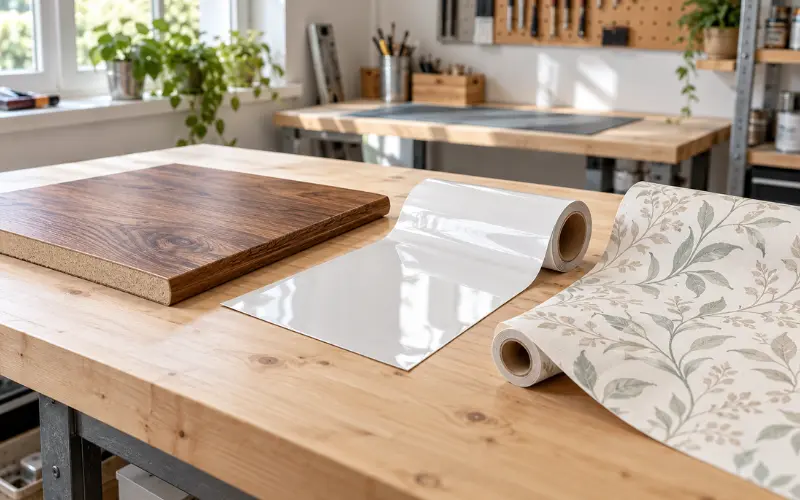
Here is the direct answer: interior film is a thick, durable architectural vinyl made for cabinets, doors, counters, and furniture; contact paper is a thin, light-duty sticker paper best kept for shelves and small crafts; and wallpaper is designed for walls only. They may all look similar on a roll, but they behave very differently once they are on your surfaces.
In this guide, we compare the three side by side on durability, moisture, finish, installation and cost, so you can choose the right one the first time.
|
⚡ QUICK ANSWER Choose interior film for cabinets, doors, wardrobes, counters and furniture, because it is thicker, more realistic and built to resist scratches, stains and moisture. Choose contact paper only for low-wear jobs like drawer liners, shelves and craft projects. Choose wallpaper for decorating large wall areas, not for high-touch furniture or kitchen surfaces. |
What is the difference between interior film, contact paper and wallpaper?
The short answer is thickness, strength and purpose. All three can change how a surface looks, but only one is engineered to be touched, cleaned and knocked every day.
What is interior film?
Interior film, also called architectural vinyl film or vinyl wrap, is a thick, self-adhesive vinyl with a printed and textured surface. It is designed to wrap cabinets, doors, wardrobes, kitchen counters, backsplashes, walls and furniture. Good films carry real texture, so woodgrain feels like timber and stone looks like stone. If you are new to the material, our guide on what architectural vinyl film is covers the basics.
What is contact paper?
Contact paper is a thin, adhesive-backed decorative sheet, traditionally used to line drawers and shelves or cover books and craft projects. It is cheap and easy to cut, but its thin face and lighter adhesive mean it can tear, scratch, bubble or lift at the edges, especially in kitchens and bathrooms.
What is wallpaper?
Wallpaper is a decorative covering for walls. It comes as traditional paste-the-wall paper, vinyl-coated wallpaper or peel-and-stick versions. It is great for adding pattern and colour across a large wall, but it is not designed to wrap the edges of a cabinet door or survive daily handling on furniture.
Table 1 — Interior film vs contact paper vs wallpaper
|
Feature |
Interior film |
Contact paper |
Wallpaper |
|
Thickness and strength |
Thick, tough architectural vinyl |
Thin, light-duty sheet |
Varies; made for flat walls |
|
Best surfaces |
Cabinets, doors, counters, walls, furniture |
Shelves, drawer liners, crafts |
Walls only |
|
Daily wear |
Resists scratches and stains |
Scratches and tears easily |
Not built for handling |
|
Moisture |
Designed to resist moisture |
Prone to lifting in humidity |
Paper types can be damaged |
|
Realistic texture |
Yes, wood, stone, leather, metal |
Mostly flat prints |
Patterned, rarely textured |
|
Wraps around edges |
Yes, with a little heat |
Difficult, often lifts |
No |
|
Removal |
Removable without damaging the surface |
Can leave residue or tear |
Often needs stripping |
Which lasts longest in a UAE home?
Interior film lasts the longest by a wide margin. UAE homes put any surface covering through a tough test: humidity, steam from cooking, strong air conditioning and frequent cleaning. Thin contact paper struggles with all of these, and paper-based wallpaper can stain or peel in wet zones.
Architectural film is designed to resist scratches, stains and moisture, which is why our FAQs describe it as suitable for high-traffic areas like kitchens and bathrooms. With good preparation and normal indoor use, it can last well over 5 years.
Which one should you use on kitchen cabinets?
Use interior film. Cabinet doors are opened dozens of times a day, splashed with water and wiped with cleaners. You need a surface that can take that without tearing, and that wraps cleanly around the door edges so there is no exposed seam to catch and lift.
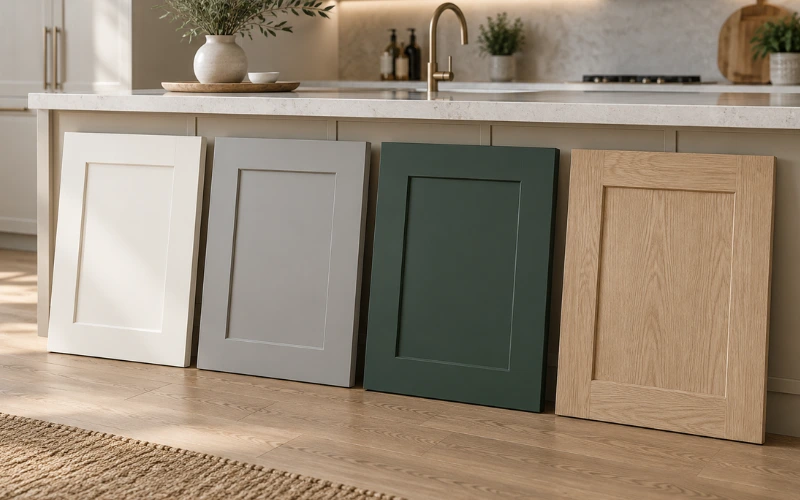
Popular choices for kitchens include warm timber from our woodgrain vinyl wrap collection and clean solid colours from our plain vinyl wrap range, with prices starting from AED 35 per metre on a 122 cm wide roll.
Can contact paper or wallpaper go on doors and furniture?
They can, but they rarely last. Contact paper on a door gets scuffed by hands, bags and vacuum cleaners, and it often lifts at the edges within months. Wallpaper is not designed to bend around edges at all. For doors, wardrobes and tables, a proper vinyl wrap gives a smooth, sealed finish that looks like a factory-made surface.

|
Upgrade from sticker to architectural finish Give your cabinets, doors and furniture a finish that looks factory-made and lasts. Explore wood, stone, cement, metallic, leather and solid-colour films, all held in stock in Dubai and sold by the metre. |
Which is easiest to install and remove?
Contact paper is the easiest to stick down, but also the easiest to get wrong, because it creases and traps bubbles. Wallpaper needs careful pattern matching and, for traditional types, paste and drying time. Interior film sits in the middle: it takes a little practice, but it is very forgiving once you have the right tools.
How to install interior film
1. Clean and degrease the surface, and let it dry fully.
2. Cut the film slightly larger than the panel.
3. Peel back a small section of backing and line up the film.
4. Smooth from the centre outwards with a squeegee.
5. Prime and wrap the edges, then trim neatly with a sharp blade.
A cutting knife, spare blades, microfibre cloths and squeegee felts are available in our installation accessories. For large jobs, a professional installer gives the best finish.
How easy is each one to remove?
Interior film can be removed without damaging the surface underneath, which suits tenants. Contact paper often tears into small pieces and can leave sticky residue. Traditional wallpaper usually needs scoring, soaking, or steaming to strip.
How do the costs compare?
Contact paper is usually the cheapest per roll, and wallpaper varies widely by brand and design. Interior film costs more per metre than basic contact paper, but it is still far cheaper than replacing cabinet doors, and it does not need redoing every few months. At Interior Film, most woodgrain designs are AED 40 per metre and many plain colours are AED 35 per metre, with free delivery across mainland UAE on orders above AED 250.
The real comparison is cost per year of use. A cheap covering that peels after one summer is more expensive in the long run than a durable film that lasts for years.
Table 2 — Which material should you choose?
|
Your project |
Best choice |
Why |
|
Kitchen cabinet doors |
Interior film |
Handles daily use, moisture and cleaning |
|
Wardrobes and interior doors |
Interior film |
Wraps edges for a seamless finish |
|
Kitchen counter or backsplash |
Interior film (stone range) |
Realistic marble and granite looks |
|
Large feature wall |
Wallpaper or interior film |
Wallpaper for pattern, film for wood or stone texture |
|
Drawer and shelf liners |
Contact paper |
Low wear and low cost |
|
Kids' crafts or short-term decor |
Contact paper |
Cheap and quick |
When is wallpaper or contact paper the better choice?
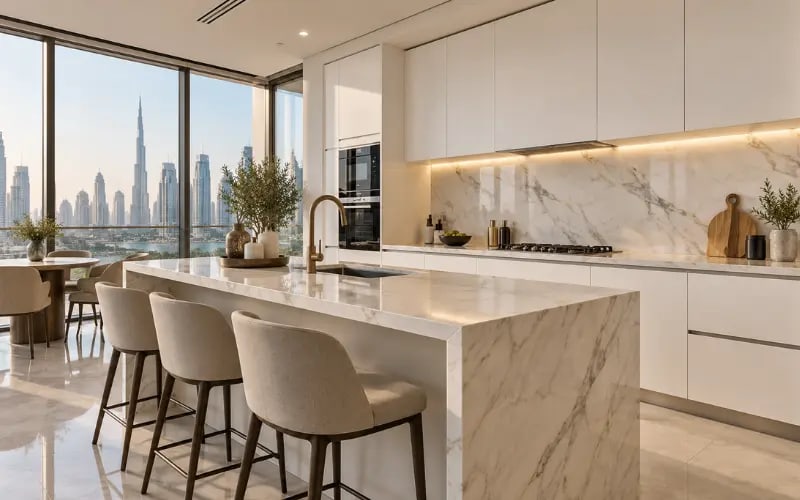
To be fair to the alternatives, they do have their place. Wallpaper is ideal for adding a bold pattern to a bedroom or living room wall. Contact paper is perfect for lining drawers, covering school books or quick seasonal decorations. But for anything you touch, clean or lean on every day, interior film is the material built for the job. For marble-look counters and splashbacks, see our stone vinyl wrap collection.
|
📊 MARKET INSIGHT The UAE home decor market reached USD 3,947.0 million in 2025 and is expected to reach USD 6,045.4 million by 2034, growing at a CAGR of 4.71%. UAE homeowners keep spending on decor upgrades, so choosing a material that lasts protects that investment. Source: IMARC Group |
Why homeowners in the UAE choose Interior FilmInterior Film is a Dubai-based specialist in architectural vinyl film, trusted by thousands of homes across the UAE. ✓ Direct from the factory and exclusive GCC distributor, with no middleman mark-up ✓ 150+ designs across nine collections, held in stock locally ✓ Delivery in 24–48 hours to most mainland UAE addresses, free on orders above AED 250 ✓ 5-year warranty against manufacturing defects ✓ Friendly support from 8 AM to 6 PM, plus Tabby and Tamara at checkout |

Frequently asked questions
Is interior film the same as contact paper?
No. Both are self-adhesive, but interior film is a thick architectural vinyl with realistic texture, designed for cabinets, doors, and furniture. Contact paper is a thin, light-duty sheet best used for shelves and crafts.
Can I use wallpaper on kitchen cabinets?
It is not recommended. Wallpaper is designed for flat walls and does not wrap edges or handle daily cleaning and moisture well. Interior film is the better choice for cabinets.
Does interior film damage the surface when removed?
No. Interior film can be removed without damaging the underlying surface, which makes it suitable for rented homes.
Is interior film suitable for bathrooms?
Yes. It is designed to resist moisture, scratches and stains, so it works well on vanities and bathroom cabinets. Seal the edges well and wipe away standing water.
The bottom line on interior film vs contact paper vs wallpaper
If you want a finish that looks real, survives daily life in a UAE home and can be removed cleanly later, interior film is the clear winner for cabinets, doors, wardrobes, counters and furniture. Explore our woodgrain vinyl wrap and stone vinyl wrap ranges to find your finish. Save contact paper for drawer liners and crafts, and use wallpaper when you want pattern across a large wall.
Still weighing your options for the kitchen? Read our comparison of vinyl wrap vs. repainting cabinets to see how film stacks up against paint on cost, durability, and finish.