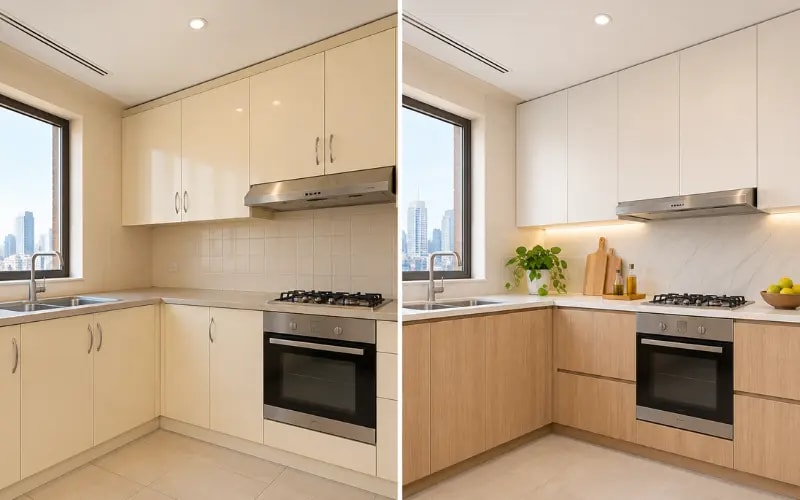
Vinyl Film vs Laminate vs Veneer: Which Surface Finish Should You Choose?
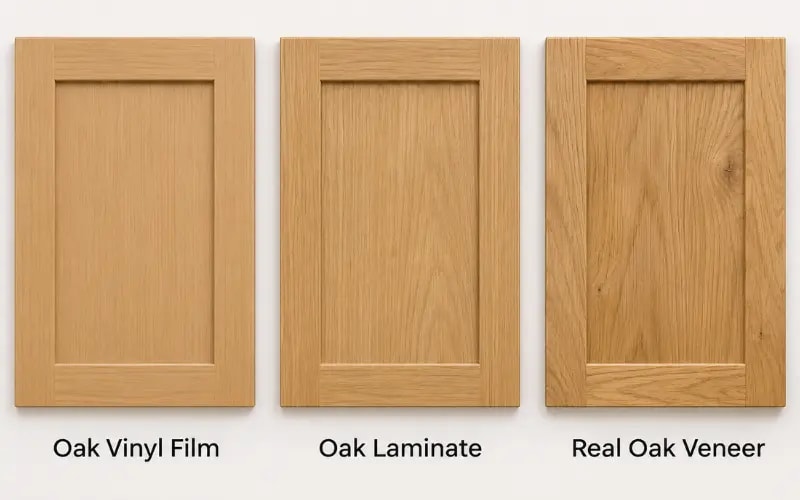
Stand in any showroom, and you will hear three words again and again: laminate, veneer and vinyl. They can all make a cabinet look like oak or a desk look like marble, so it is easy to assume they are the same. They are not. Choose the wrong one, and you could pay for a factory finish you did not need, or end up with a surface that cannot handle your kitchen.
Here is the direct answer: choose vinyl film to refresh existing surfaces quickly, cleanly and affordably on site; choose laminate when you are building or replacing joinery and want a very hard-wearing, heat-tolerant surface; and choose veneer when you want real wood and are happy to care for it. If you are new to film, our guide to what architectural vinyl film is explains the basics, and you can see real finishes in our woodgrain vinyl wrap collection.
Below, we compare all three on look, durability, cost, installation and care, so you can pick the right finish for each job.
|
⚡ QUICK ANSWER Vinyl film is a self-adhesive decorative film applied over existing surfaces, ideal for fast, low-mess makeovers and removable later. Laminate is a hard, resin-based sheet bonded to new boards during manufacture, ideal for new joinery and heavy wear. Veneer is a thin slice of real wood glued to a board, ideal when you want genuine timber. For refreshing cabinets, doors and furniture you already own, vinyl film is usually the fastest and most affordable option. |
What is the difference between vinyl film, laminate, and veneer?
The main difference is what they are made of and when they are applied.
What is vinyl film?
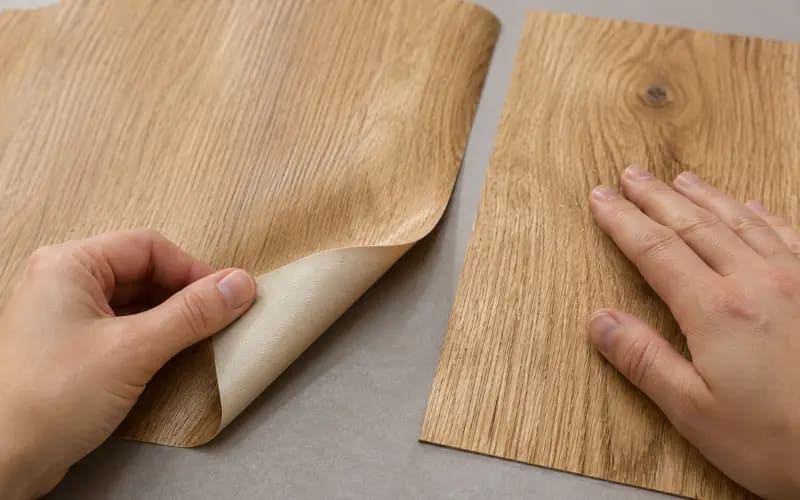
Vinyl film, also called interior film or architectural film, is a flexible vinyl with a printed, textured face and a self-adhesive back. It is applied on site over existing surfaces such as cabinets, doors, and furniture. At Interior Film, it comes on a 122 cm wide roll and is priced per metre, from AED 35 (at the time of publishing, November 2026).
What is laminate?
Laminate is a decorative paper layer sealed with resin and bonded to a board, usually during manufacture or by a carpenter using adhesive and pressure. High-pressure laminates are known for being tough and resistant to everyday heat and wear, which is why they are common on worktops and new kitchen units.
What is veneer?
Veneer is a very thin slice of real wood glued onto a stable board such as MDF or plywood. It gives you genuine wood grain and natural variation, but because it is real timber, it needs sealing and more careful care around water and strong sunlight.
Table 1 — Vinyl film vs laminate vs veneer
|
Factor |
Vinyl film |
Laminate |
Veneer |
|
What it is |
Self-adhesive decorative vinyl |
Resin-sealed decorative sheet on board |
Thin slice of real wood on board |
|
When applied |
On site, over existing surfaces |
During manufacture or by a carpenter |
During manufacture or by a carpenter |
|
Looks |
Wood, stone, metal, leather, solid colours |
Wide range of prints and colours |
Genuine wood grain only |
|
Daily wear |
Resists scratches, stains and moisture |
Very hard-wearing |
Needs care; can mark or fade |
|
Heat |
Keep hot pans off |
Generally more heat-tolerant |
Keep hot items off |
|
Mess and time |
No dust; often a day or two |
Needs new or removed panels |
Needs new panels and finishing |
|
Removable |
Yes, without damaging the surface |
No |
No |
|
Best for |
Refreshing what you already have |
New joinery and heavy-use worktops |
Premium real-wood furniture |
|
📊 MARKET INSIGHT The global decorative laminates market was valued at USD 9.09 billion in 2025 and is projected to reach USD 11.82 billion by 2034, with furniture the largest application at around 40%. Laminate remains a mainstay for new furniture, while vinyl film fills a different need: refreshing existing pieces without replacing them. Source: Fortune Business Insights |
Which looks the most realistic?
Veneer is real wood, so it is the most authentic for timber looks. Good vinyl film and laminate both use printed designs, and quality films add a textured surface so the grain can be felt as well as seen. Film also goes beyond wood, with stone, cement, metallic, leather, and fabric effects from one supplier. Explore stone looks in our stone vinyl wrap range.
Which is the most durable?
For heavy wear and heat, laminate usually comes out on top, which is why it is common on new worktops. Vinyl film is designed to resist scratches, stains, and moisture, according to our FAQs, which makes it well suited to cabinet doors, wardrobes, and furniture. Veneer is real wood, so it can scratch, mark with water, and fade in strong sun if it is not sealed and cared for.
What about heat in the kitchen?
With film and veneer, always use trivets and avoid placing hot pans directly on the surface. Laminate worktops are generally more heat-tolerant, but it is still good practice to protect them.

|
Refresh what you already have Give cabinets, doors and furniture a new finish without new panels. Choose from wood, stone, plain, cement, metallic, leather and more, sold by the metre from AED 35 (at the time of publishing, November 2026) on a 122 cm wide roll, with free mainland UAE delivery above AED 250. |
Which is the most affordable?
For refreshing existing cabinets or furniture, vinyl film is usually the most affordable option because you keep the panels you already have and only buy the new surface. Laminate and veneer generally mean new or re-faced panels, plus workshop or carpentry labour. At Interior Film, popular woodgrain films such as Light Oak Vinyl Wrap are AED 40 per metre, and many plain colours are AED 35 per metre (at the time of publishing, November 2026).
For new kitchens and furniture being built from scratch, laminate is a cost-effective factory finish, while veneer sits at the premium end.
Which is easiest to install?
Vinyl film is the only one of the three that most homeowners can apply themselves. It needs a clean surface, a squeegee and a sharp blade, and it can be done room by room. Laminate and veneer are usually applied by a workshop or carpenter, often with the panels removed from your home.
1. Clean and degrease the surface.
2. Cut the film slightly larger than the panel.
3. Smooth it on from the centre with a squeegee.
4. Prime and wrap the edges, then trim neatly.
The tools you need are in our installation accessories.
|
📊 MARKET INSIGHT In the Houzz 2025 Kitchen Trends Study, most homeowners (57%) chose a painted cabinet finish, while 17% chose stain and 7% chose wood veneer. Real wood veneer is a niche choice. Most people want the look of a finished colour or wood, which vinyl film can deliver on existing doors. Source: Houzz |
Which is easiest to maintain?
Vinyl film and laminate are both easy to live with. Film needs only a soft cloth and mild soap, and you should avoid abrasive cleaners and scrubbing pads. Laminate is similar and is generally very forgiving of daily cleaning. Veneer needs the most care: because it is real wood, it should be wiped dry quickly, kept out of strong direct sun where possible, and may need refinishing over time to keep its protective coat in good condition.
There is one more difference worth knowing. If you tire of a film finish, it can be removed and replaced with a new design without damaging the surface underneath. Changing laminate or veneer usually means replacing the panel.
Which should you choose for your project?
Table 2 — Best finish by project
|
Project |
Best choice |
Why |
|
Refreshing existing kitchen cabinets |
Vinyl film |
New look without replacing doors |
|
Rented apartment upgrade |
Vinyl film |
Removable without damaging the surface |
|
Brand-new kitchen units |
Laminate |
Durable factory finish |
|
Heavy-use worktop in a new kitchen |
Laminate |
Generally more heat- and wear-tolerant |
|
Premium real-wood furniture |
Veneer |
Genuine timber grain |
|
Office or hotel refurbishment |
Vinyl film |
Fast, low-disruption update |
|
Wardrobes and interior doors |
Vinyl film |
Quick, consistent finish on site |

Can you put vinyl film over laminate or veneer?
Yes. Vinyl film is often applied over existing laminate, provided the surface is clean, degreased and sound. It can also go over sealed veneer in good condition. Glossy surfaces need thorough degreasing, and edges benefit from an adhesive promoter.
|
📊 MARKET INSIGHT The global decorative films and foils market was valued at USD 3.00 billion in 2023 and is forecast to reach USD 3.91 billion by 2029, growing at a CAGR of 4.52%. Decorative films are growing alongside laminates because they offer a fast way to update surfaces that already exist. Source: Arizton |
Why UAE homeowners choose Interior FilmInterior Film is a Dubai-based architectural vinyl film specialist, with thousands of homes transformed across Dubai and the UAE. ✓ Direct from the factory and exclusive GCC distributor, with no middleman mark-up ✓ 150+ designs across nine collections, held in stock locally ✓ Delivery in 24–48 hours to most mainland UAE addresses, free on orders above AED 250 ✓ 5-year warranty against manufacturing defects ✓ Support from 8 AM to 8 PM, plus Tabby or Tamara at checkout |
Frequently asked questions
Is vinyl wrap better than laminate?
It depends on the job. Vinyl wrap is better for refreshing existing surfaces quickly and affordably. Laminate is better for new joinery and heavy-use worktops that need extra heat and wear tolerance.
Is vinyl film cheaper than veneer?
For updating existing cabinets and furniture, vinyl film is usually far cheaper than veneer, because you keep your current panels and avoid workshop labour.
Does vinyl film look like real wood?
Quality woodgrain films are printed and textured, so they look and feel like timber. Veneer is still the only option made from real wood.
Can I remove vinyl film later?
Yes. Interior film is designed to be removed without damaging the surface underneath. Laminate and veneer are permanent once bonded.

The bottom line on vinyl film vs laminate vs veneer
All three finishes have their place. Laminate is the workhorse for new joinery and tough worktops, veneer is the choice for genuine wood, and vinyl film is the smartest way to refresh what you already have, quickly, cleanly and affordably, with the freedom to change it later.
If your cabinets and furniture are in good shape, start with film. Compare it with paint in our guide to vinyl wrap vs. repainting cabinets, or contact our team for advice on the best finish for your space.